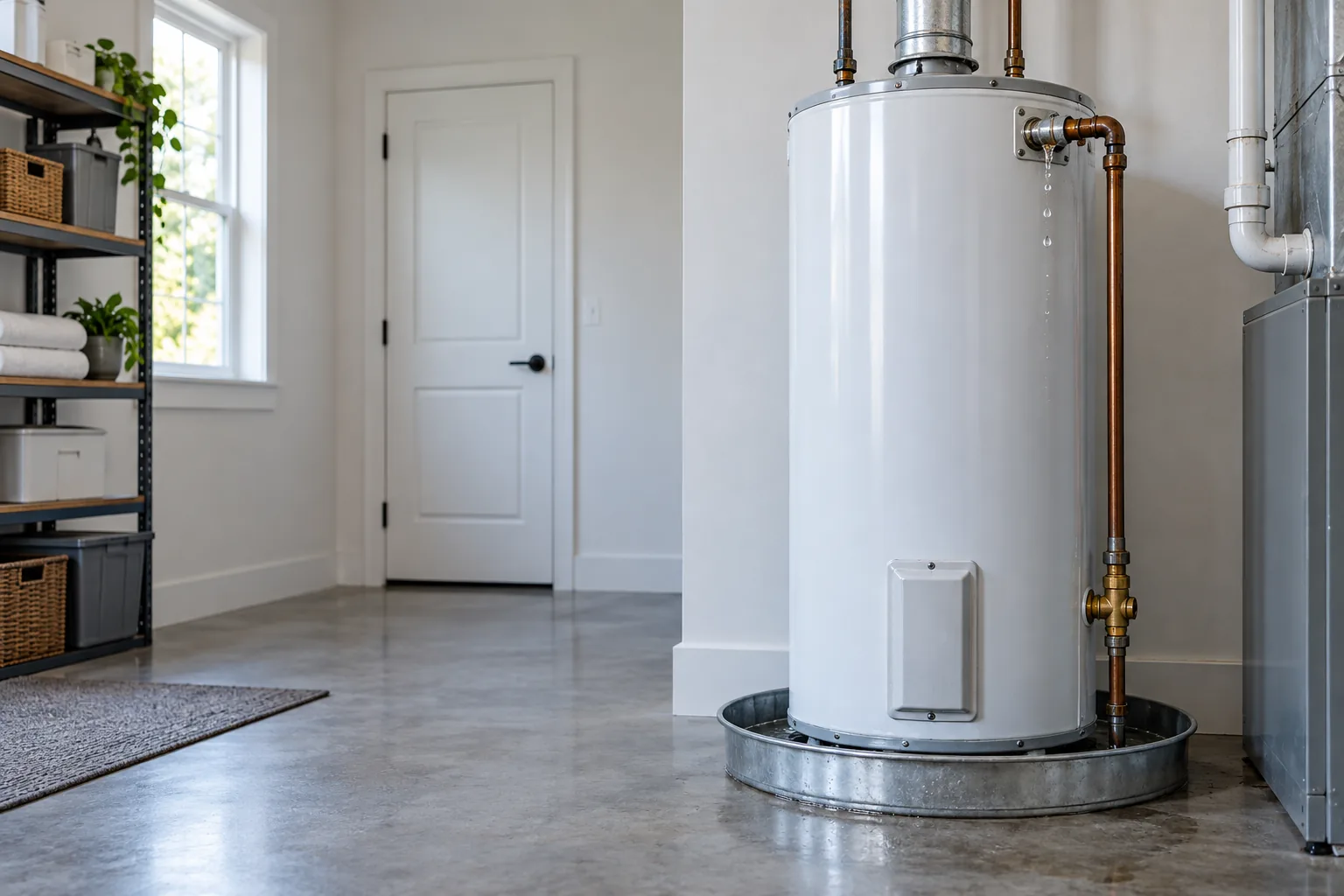
The Bridgewater leak pattern, explained
Bridgewater is the Bridgewater Club area with its larger executive homes. That shapes what fails: Bridgewater homes frequently pair a main tank with recirculating lines, which keeps fittings warm, wet and aging faster — top-connection weeps are the signature call here.
Bridgewater's irrigation systems share the home's water supply, and a cross-connection or pressure interaction occasionally shows up as heater-room symptoms — pressure spikes that weep relief valves in summer watering season. If your Bridgewater relief valve only drips in the months the sprinklers run, mention the timing; it is a genuinely useful clue.
The Bridgewater homeowner's first moves
- Note whether the drip follows irrigation days — seasonal timing points at pressure, not the tank.
- Larger Bridgewater homes often have the heater far from the master bath; long hot runs mean more fittings, and every fitting is a future weep point worth a yearly glance.
- Whatever the source, photograph the wet point before anything dries — in Bridgewater as everywhere in Westfield, the photo taken in the first hour is worth more than an hour of describing it later.
Useful next pages for Bridgewater homeowners: repair diagnosis, valve and relief-line leaks, and the winter preparation checklist.
Water heater leaking in Bridgewater?
Describe the first wet point and the unit's age on the call. Call to book a visit — we serve Bridgewater and will confirm availability, any diagnostic fee, and a written price before any work you approve.
Call (317) 680-1542Water Leak Repair Pros — your Westfield water heater team.