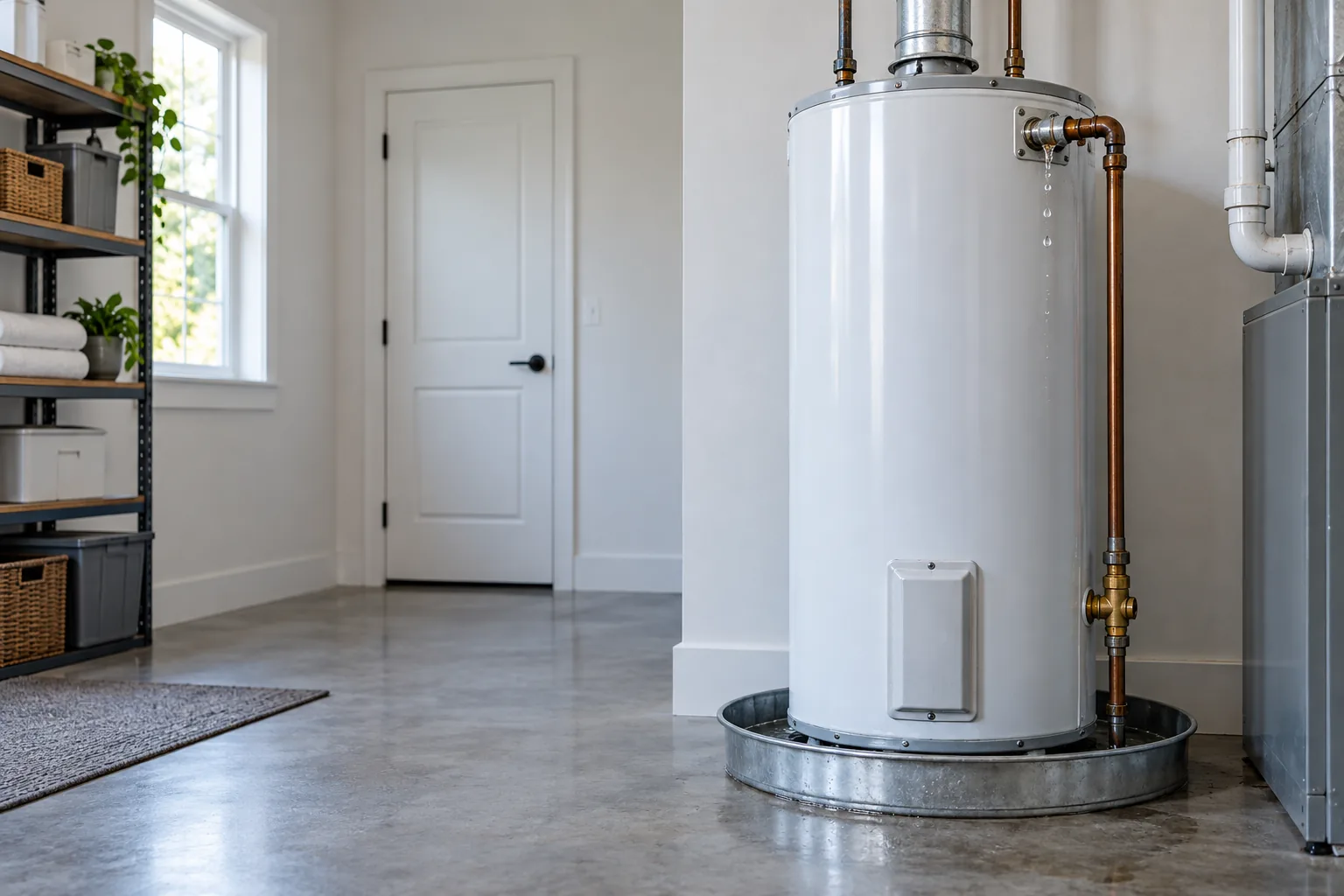
Signs this is your leak
- Water at the base or fittings — same sources as any tank unit: shell, valves, connections
- Burner area looks rusty or wet — a leak dripping onto the burner assembly
- Pilot or burner problems starting with the leak — water and combustion do not mix well
- Any smell of gas, at any time — this is an emergency step, not a repair note
The safety order for gas units
If you smell gas: leave the home, and call the utility's emergency line or 911 from outside. Do not relight pilots, flip switches, or investigate. For water alone, with no gas smell: you can close the cold water supply to the heater if safely reachable, and the gas control can be set to 'pilot' or off per the unit's label instructions — but never dismantle gas piping, the flue, or the burner to look for a leak. Venting faults and combustion problems are diagnosis work for a trained technician with the right instruments.
What we check on a gas unit
Beyond tracing the water, a proper gas-unit inspection includes burner and flue condition, signs of backdrafting or scorching, the state of the gas control, and whether water has reached components that must be replaced rather than dried out. You will get the leak finding and any safety findings together, in writing, before approving work.
Related help: Water heater repair · Tank leak guide · All leak help
Ready to describe the problem?
Call to discuss the symptoms. We confirm availability and any diagnostic fee on the call — and the full price in writing before any work starts.
Call (317) 680-1542Water Leak Repair Pros — your Westfield water heater team.